Parvo Treatment Cost by Type of Care
The type of care your puppy receives moves the bill more than anything else. Most puppies with parvo are hospitalized for several days of round-the-clock fluids and nursing. Some stable puppies can be treated with a vet-supervised outpatient protocol instead, which costs far less but asks a lot of the owner.
| Type of care | Typical total | What it usually involves |
|---|---|---|
| Shelter outpatient program | About $60–$500 | Daily or twice-daily checks, under-the-skin fluids and medications given by staff or volunteers (published shelter programs) |
| Outpatient protocol at a private vet | $300–$1,000 | Diagnosis and stabilization, then home care with frequent vet rechecks |
| Hospitalization at a general vet | $1,500–$4,000 | IV fluids, anti-nausea medication, antibiotics, bloodwork and nursing for 3–7 days |
| Emergency or specialty hospital (ICU) | $3,000–$8,000+ | 24-hour ICU care, repeated lab work, feeding tubes, plasma if needed |
For a typical hospitalized puppy at a general practice, most owners pay around $2,500 for about four days of care. Severe cases with a long stay, plasma transfusions or complications can pass $10,000, according to Embrace Pet Insurance.
Inpatient Hospitalization vs. Outpatient Treatment
Hospitalization is still considered the gold standard. A hospitalized puppy gets IV fluids to replace what it loses through vomiting and diarrhea, electrolyte and sugar support, anti-nausea medication, antibiotics, nutrition and constant monitoring. The University of Florida shelter medicine text puts traditional inpatient treatment at about $1,000 to $3,000 per dog, and private clinics often charge more.
The Colorado State University (CSU) outpatient protocol
Researchers at Colorado State University developed an outpatient protocol for owners who cannot afford a hospital stay. In their study, puppies were first stabilized in the hospital, then treated with under-the-skin fluids and injectable medications instead of IV therapy. Survival was 80% with the outpatient protocol versus 90% with hospitalization. CSU pointed out the study was small (20 puppies per group) and that hospitalization remains the gold standard.
The cost difference is large: CSU described outpatient care as costing a few hundred dollars, versus a few thousand for a hospital stay. Larger shelter studies summarized by the University of Florida found similar results:
- Pennsylvania SPCA (95 dogs): 83% survival, about $479 per dog, averaging four days of fluids.
- Austin Pets Alive! (5,000+ dogs): 87% survival, about $56–$300 per dog, with much of the care given by trained volunteers.
Those shelter figures reflect donated labor and wholesale supplies, so a private clinic running the same approach will charge more.
Who outpatient care can work for
Outpatient treatment is a decision for your veterinarian, not a do-it-yourself option. It generally relies on careful patient selection: very small, severely dehydrated, cold or very weak puppies did worse in the shelter studies. It also needs an owner who can give treatments and monitor the puppy every few hours, day and night, and bring it back for frequent rechecks.
If cost is the barrier, tell your vet early. Many clinics can discuss a hospitalization plan, a shorter stay followed by outpatient care, or an outpatient protocol, and explain the trade-offs for your puppy.
What’s Included in the Price
A parvo bill is built from a handful of line items, repeated every day the puppy stays in the hospital. These are typical ranges reported by vet cost guides:
| Item | Typical cost |
|---|---|
| Exam (general vet) | $40–$80 |
| Emergency exam fee | $100–$250 |
| Parvo fecal antigen (ELISA) test | $50–$100 |
| Bloodwork (often repeated during the stay) | $100–$200 per panel |
| Hospitalization and nursing | $350–$700 per day at a general vet; more in an ICU |
| IV fluids and catheter | $150–$300 |
| Anti-nausea medication | $15–$35 per medication |
| Antibiotics | $30–$50 |
| Plasma transfusion (if needed) | $500–$1,000 each |
| X-rays or ultrasound (if needed) | $150–$250 / $300–$600 |
| Recheck and repeat bloodwork after discharge | $100–$250 |
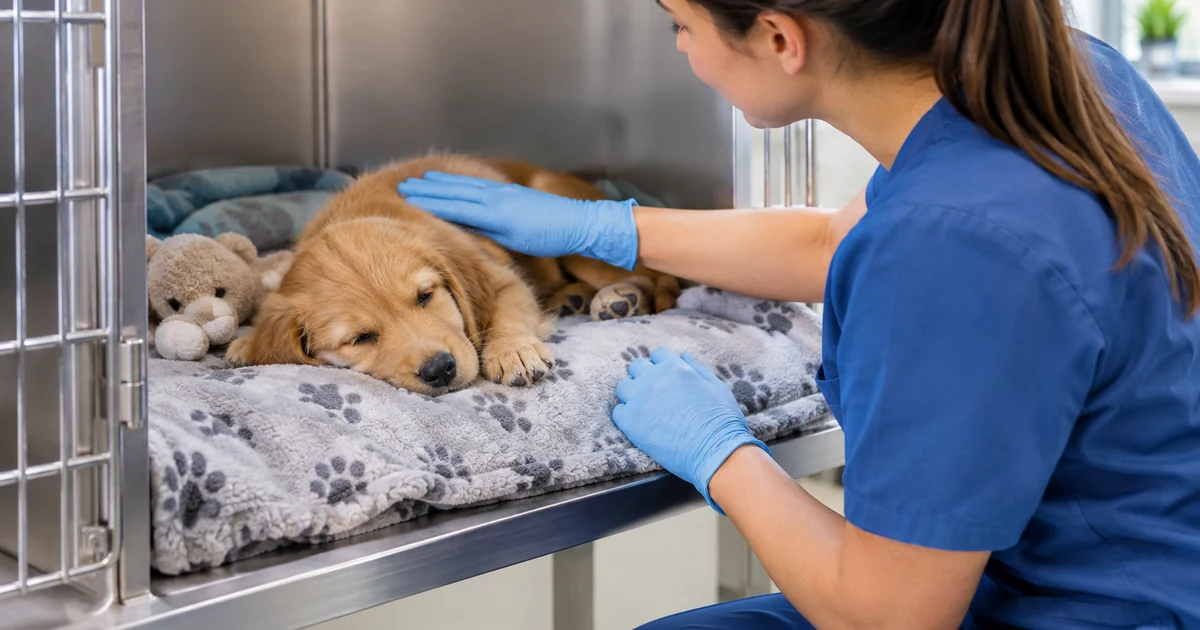
The daily hospital charge is the line that grows. It usually covers the cage in an isolation ward, nursing, protective equipment and frequent monitoring. Isolation adds cost because staff must gown up and disinfect every time they handle a contagious patient.
How Many Days in the Hospital?
GoodRx and PetMD both describe typical hospital stays of about five to seven days, though some puppies go home sooner and others need longer. Here is how the length of stay changes a general-vet bill, including the first-day tests and a recheck:
| Days in the hospital | General vet | Emergency / specialty hospital |
|---|---|---|
| 2–3 days | $1,300–$3,350 | $2,100–$5,400 |
| 4–5 days | $2,000–$4,750 | $3,200–$7,600 |
| 6–7 days | $2,700–$6,150 | $4,300–$9,800 |
Ask for an estimate that shows the cost per additional day. That makes it much easier to follow the bill as your vet updates you on progress.
What Affects the Cost of Parvo Treatment
How sick the puppy is
Puppies brought in early, while still drinking and only mildly dehydrated, often need fewer days and fewer extras. Puppies with severe dehydration, low blood sugar, low protein or infection spreading beyond the gut may need plasma, feeding tubes, more lab work and a longer stay.
Emergency hospital vs. general vet
Emergency and specialty hospitals staff their wards around the clock, so their exam fees and daily rates are higher, often 50% or more above a general practice. On the other hand, many general practices are not staffed overnight and may transfer a very sick puppy to an ER. Our emergency vet cost guide explains typical ER fees.
Size and age
Larger puppies need more fluids and medication, which nudges the bill up modestly. Very small or very young puppies cost less in supplies but can be more fragile, so they may need closer monitoring or a longer stay.
Region
Vet prices are higher in big metro areas and on the coasts. In areas where parvo is common, shelters and nonprofit clinics are more likely to run lower-cost treatment programs.
Complications
Some puppies develop complications such as intussusception (the intestine telescoping into itself), which can require surgery and add thousands to the total. Your vet will update the estimate if the plan changes.
Could pet insurance cover a bill like this?
Accident & illness plans typically reimburse 70–90% of eligible vet costs after the deductible, if the condition is not pre-existing and the waiting period has passed. Premiums for dogs average about $62/month and for cats about $32/month (NAPHIA, 2025).
Coverage is subject to each policy’s terms, exclusions and state availability.Does Pet Insurance Cover Parvo Treatment?
Parvo is an illness, so accident-and-illness policies may cover diagnosis, hospitalization and medication once the illness waiting period has passed. Accident-only plans do not cover it. The details matter, because parvo mostly affects young, newly adopted puppies.
- Vaccination requirements: several insurers, including Trupanion and Lemonade, say parvo is covered only if the dog is current on recommended vaccines and the condition is not pre-existing. A puppy still partway through its series may be judged against the schedule your vet recommended.
- Waiting periods: if signs appear before the waiting period ends, the illness is typically treated as pre-existing and excluded.
- Reimbursement: covered bills are paid back after your deductible at your chosen reimbursement rate, up to the annual limit.
- Wellness add-ons: optional preventive plans may reimburse part of the puppy vaccine series.
Coverage is subject to each policy’s terms, exclusions and state availability. Enrolling a new puppy early, before any illness appears, is what gives a policy a chance to help. See our guides to pet insurance cost and whether pet insurance is worth it.
Parvo Prevention: Puppy Vaccine Series vs. Treatment
Parvovirus is part of the core DHPP (or DAPP) vaccine that vets recommend for all dogs. PetMD describes the usual approach: a series starting around 6 weeks of age, with boosters every few weeks until about 16 weeks, a booster at one year, then boosters every few years. Your vet will set the exact schedule for your puppy.
| Cost item | Typical price |
|---|---|
| Single DHPP / DAPP shot | $20–$60 at a general vet |
| Full puppy series, first year (with exams) | $230–$600, typically about $375 |
| Low-cost vaccine clinic series | Often about half of general-vet prices |
| Parvo treatment in the hospital | $1,500–$4,000 at a general vet |
A full vaccine series costs a fraction of a single hospital stay. Our dog vaccinations cost guide breaks down each shot and visit. Until the series is complete, many vets suggest avoiding dog parks, pet store floors and other places where unknown dogs go; ask your vet what is safe where you live.
Signs of Parvo: When It’s an Emergency
Early signs can look like a puppy that is simply tired or off its food. They often progress quickly to vomiting and diarrhea, which may be bloody.
Contact your vet or an emergency hospital now if a puppy or unvaccinated dog has any of these:
- Vomiting, especially repeated vomiting
- Diarrhea, particularly if it is bloody or has a strong smell
- Lethargy, weakness or refusing food or water
- Fever, or feeling cold to the touch
- Collapse, a fast heart rate or trouble breathing
Call ahead before you arrive. Clinics often bring suspected parvo patients in through a separate entrance to protect other dogs. Do not wait to see if it passes, and do not try to treat parvo at home without a veterinarian directing the care.
Questions to Ask Your Vet
- What does the estimate include, and what is the charge for each extra day?
- Is my puppy a candidate for outpatient treatment or a shorter hospital stay?
- Is the hospital staffed overnight, or would my puppy be transferred?
- What would make the plan change (plasma, imaging, surgery) and roughly what would that add?
- Do you offer payment plans or accept financing?
- How should I clean my home, and when is it safe to bring in a new puppy?
How to Save Money on Parvo Treatment
- Vaccinate on schedule: the full puppy series is by far the cheapest way to avoid a parvo bill.
- Ask about outpatient options: for a stable puppy, your vet may offer an outpatient protocol or a shorter stay followed by home care.
- Contact shelters and humane societies: some run parvo treatment programs or can point you to local help.
- Check veterinary schools: teaching hospitals sometimes have lower fees or assistance funds.
- Request an itemized, day-by-day estimate: it helps you plan and lets you ask what is essential.
- Use financing if you need it: CareCredit and Scratchpay can spread a large bill over time. Our guide on how to pay for vet bills covers more options.
- Insure a new puppy early: coverage only helps for illnesses that start after enrollment and the waiting period.
- Washable puppy pads for recovery at homeCheck price on Amazon
- Kennel disinfectant labeled for parvovirusCheck price on Amazon
Planning for a new dog? Our cost of owning a dog guide includes first-year vaccines and vet visits.
Frequently Asked Questions
How much does parvo treatment cost for a puppy?
Most hospitalized puppies cost $1,500 to $4,000 at a general vet, with a typical bill around $2,500 for about four days. Emergency hospitals often charge $3,000 to $8,000 or more, and a vet-supervised outpatient protocol may cost $300 to $1,000.
How long does a puppy stay in the hospital for parvo?
Typical stays are about five to seven days, although some puppies go home after a few days and severe cases stay longer. Each extra day usually adds $350 to $700 at a general vet, and more at an emergency hospital.
Can parvo be treated at home?
Some stable puppies can be treated with an outpatient protocol, such as the one developed at Colorado State University, but only under a veterinarian’s direction and with frequent rechecks. In CSU’s small study, survival was 80% with outpatient care versus 90% with hospitalization. Your vet decides whether it is an option for your puppy.
Why is parvo treatment so expensive?
Puppies with parvo usually need several days of IV fluids, medications, repeated bloodwork and 24-hour nursing in an isolation ward. Isolation means extra protective equipment and disinfection every time staff handle the puppy. The daily hospital charge is what adds up.
Does pet insurance cover parvo?
Accident-and-illness policies may cover parvo if it starts after enrollment and the waiting period. Several insurers require the dog to be current on recommended vaccines, and accident-only plans do not cover it. Coverage is subject to each policy’s terms, exclusions and state availability.
- Colorado State University — New CSU treatment option for parvovirus
- University of Florida — Shelter Animal Physical Health: Canine parvovirus treatment
- PetMD — Parvo in dogs and puppies
- Embrace Pet Insurance — Does pet insurance cover parvo?
- Trupanion — Does Trupanion cover parvo?
- Vety — How much does parvo treatment cost?
Not veterinary advice. Prices are estimates for budgeting, not quotes. Ask your veterinarian for a written, itemized estimate. If your pet is injured, in pain or acting unwell, contact your vet or an emergency animal hospital right away.