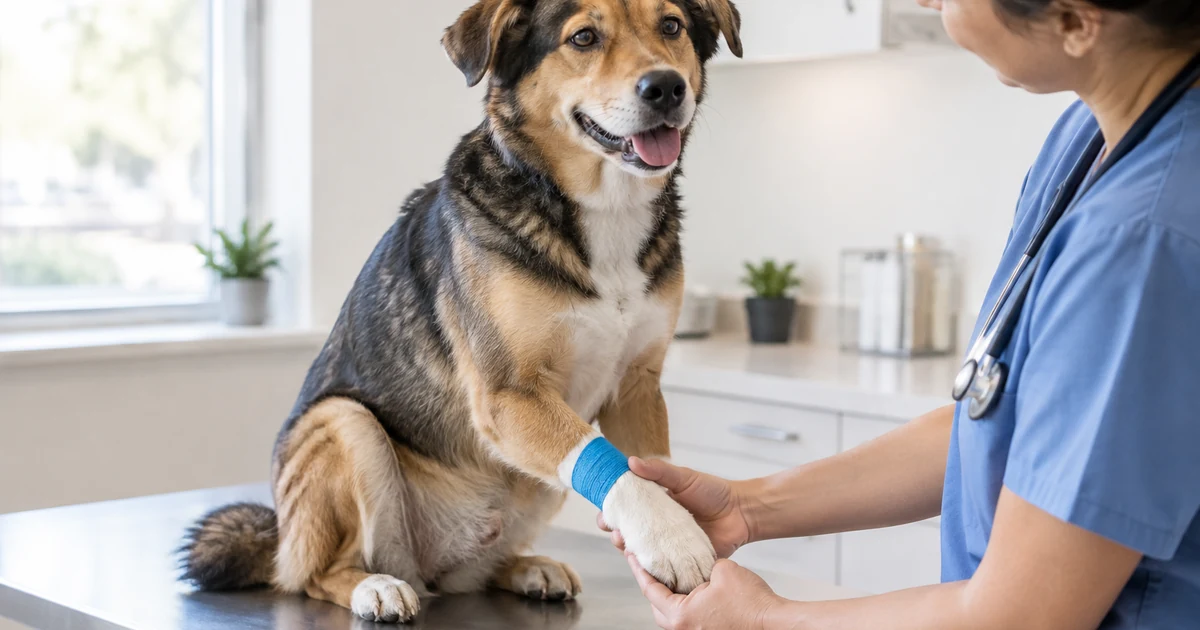
Dog Stitches Cost by Type of Repair
How much sedation or anesthesia your dog needs matters more than the number of stitches. A calm dog with a small, clean cut can often be closed with a local numbing agent. A deep or dirty wound needs sedation or general anesthesia, cleaning and sometimes a drain.
| Type of repair | Regular vet (all in) | Emergency vet (all in) |
|---|---|---|
| Small cut: staples, skin glue or a few stitches, local numbing | $175–$500 | $300–$800 |
| Moderate cut: stitches under sedation | $350–$900 | $550–$1,450 |
| Large, deep or contaminated wound: general anesthesia, possible drain | $850–$2,000 | $1,350–$3,300 |
| Bite wounds with several punctures | $400–$1,500 | $650–$2,500 |
For context, Pumpkin reports that its average emergency claim for a dog laceration was about $203, while bite wounds averaged about $420. MetLife lists emergency wound treatment for dogs at $800 to $2,500. The spread reflects how different a small nick is from a deep tear.
Stitches, Staples or Glue: How Closure Type Changes the Bill
Vets pick the closure that fits the wound. Price follows from that choice, not the other way around.
- Skin glue: used for tiny, clean cuts with neat edges. It’s the fastest option and usually the cheapest.
- Staples: quick to place on straight cuts over flat areas like the back or flank. Less time under sedation often means a lower bill.
- Stitches (sutures): the standard for most lacerations, especially on legs, paws and faces, or when layers under the skin also need closing. Deeper repairs use dissolving stitches inside plus skin stitches on top.
- Left open to heal: some older, dirty or bite wounds are cleaned and managed with bandages instead of closed right away. That can mean several bandage changes, each billed as a visit.
What Happens at the Appointment
Knowing the steps helps you read the estimate. The vet examines your dog, checks for other injuries and decides how much sedation is needed. The area is then clipped and flushed, which is often the most time-consuming part of a dirty wound.
Next comes the closure itself, sometimes with a drain for deep pockets. Most dogs go home the same day with medication and a cone, and come back in about 10 to 14 days for a recheck and suture removal. A dog put under general anesthesia may stay a few extra hours to wake up fully.
What’s Included in the Price
- Exam: $50–$90 at a regular vet, $150–$250+ at an emergency hospital.
- Sedation or anesthesia: roughly $65–$300 for sedation, more for general anesthesia on a long repair (MetLife cites $90 to $1,200+ for anesthesia overall).
- Clipping, cleaning and flushing the wound: usually built into the repair fee.
- Stitches, staples or glue: the closure itself, often priced as one procedure fee.
- Drain placement (deep or infected wounds): adds to the procedure fee.
- Take-home medication: antibiotics and pain relief, about $25–$85.
- Cone (e-collar): $10–$50.
- Recheck and suture removal: $20–$80, sometimes included.
If your vet suspects damage under the skin, X-rays ($150–$250) or bloodwork ($100–$200) may be added.
What Affects the Cost of Dog Laceration Repair
Wound size, depth and location
Long, deep or dirty wounds take more time to clean and close. Wounds on paw pads, joints or near the eyes are trickier and may need a bandage or more rechecks.
Sedation vs. general anesthesia
Sedation is lighter and cheaper. General anesthesia requires monitoring, an IV line and more staff time, which is why it pushes a repair toward the top of the range.
Dog size and temperament
Bigger dogs need more medication. An anxious or painful dog may need sedation even for a small cut, simply so the vet can work safely.
Clinic type and time of day
A daytime appointment at your regular vet is usually the least expensive. Urgent care clinics sit in the middle, and a 24/7 emergency vet commonly charges 50% or more above a general practice.
Number of wounds
Dog fights and fence or barbed-wire injuries often leave several wounds at once. Each one needs cleaning and closing, so a dog with three or four cuts will cost noticeably more than one with a single laceration, even if each cut is small.
Region
Big-city clinics on the coasts tend to charge more than rural or Midwest practices for the same repair.
Complications
Infection, a wound that reopens after the dog licks it, or a bite that damaged deeper tissue can mean extra visits, a second repair or a longer medication course.
Could pet insurance cover a bill like this?
Accident & illness plans typically reimburse 70–90% of eligible vet costs after the deductible, if the condition is not pre-existing and the waiting period has passed. Premiums for dogs average about $62/month and for cats about $32/month (NAPHIA, 2025).
Coverage is subject to each policy’s terms, exclusions and state availability.Does Pet Insurance Cover Dog Stitches?
Cuts, lacerations and bite wounds are accidents, so they are usually covered by both accident-only and accident-and-illness plans. Accident waiting periods are often short (a few days), but the injury has to happen after coverage starts.
You normally pay the clinic, then file a claim and get reimbursed minus your deductible and co-insurance. Exam fees are covered by some plans and not others, so check your policy terms. Our guide is pet insurance worth it? walks through the math.
When a Cut Is an Emergency
Contact your vet or an emergency vet right away if you notice:
- Bleeding that doesn’t slow after a few minutes of firm pressure
- A gaping wound, or one where you can see fat, muscle or bone
- Any bite wound, even if the punctures look small
- Wounds on the chest, belly, eyes or around the mouth
- Limping, weakness, pale gums or fast breathing
Cuts are usually easiest to close cleanly when they’re seen soon after the injury. Call ahead so the team can be ready.
How to Save Money on Dog Stitches
- Call your regular vet first during opening hours. Many keep same-day slots for injuries and charge less than an ER.
- Try an urgent care clinic for non-life-threatening cuts outside office hours.
- Ask for an itemized estimate before treatment, with a low and a high end.
- Use financing such as CareCredit or Scratchpay if the bill is due all at once.
- Prevent licking with a well-fitted cone so the repair doesn’t reopen and need a second round.
- Keep the recheck appointment. Catching an infection early is cheaper than treating it late.
- Insure before accidents happen: an accident plan is often inexpensive for young dogs.
- Soft or inflatable dog recovery cone (e-collar)Check price on Amazon
Frequently Asked Questions
How much does it cost for a dog to get stitches?
Most dogs get stitched up for $175 to $2,000 at a regular vet, and about $500 is typical for a moderate cut closed under sedation. A small cut closed with staples or a few stitches often costs $175 to $500 all in. Large wounds under general anesthesia run about $850 to $2,000 at a regular vet and more at an emergency hospital.
Why does the emergency vet charge more for stitches?
Emergency hospitals are staffed around the clock, so their exam fees are higher (often $150 to $250 or more) and treatments are usually priced above a daytime clinic. The repair itself is the same kind of procedure. If the wound is bleeding heavily or deep, going straight to the ER is still the right call.
Are staples cheaper than stitches for dogs?
Often, yes. Staples and skin glue are quick to place, so a small, clean cut closed this way can cost less than a sutured repair. Your vet chooses the closure based on where the wound is and how deep it goes, not on price alone.
How much is it to get dog stitches removed?
Suture or staple removal is usually $20 to $50, and some clinics include it in the original price. If it’s combined with a recheck exam, expect roughly $40 to $80 at a regular vet.
Does pet insurance pay for dog stitches?
Cuts and bite wounds are accidents, so they are usually covered by both accident-only and accident-and-illness plans once the waiting period has passed. You typically pay the vet first and get reimbursed minus your deductible and co-insurance, subject to your policy terms.
Not veterinary advice. Prices are estimates for budgeting, not quotes. Ask your veterinarian for a written, itemized estimate. If your pet is injured, in pain or acting unwell, contact your vet or an emergency animal hospital right away.