Luxating Patella Surgery Cost by Grade
A luxating patella is a kneecap that slips out of its groove. Vets grade it from 1 (mild) to 4 (severe), and the grade is the biggest driver of what you’ll pay, because it decides whether surgery is suggested at all and how much repair the knee needs.
| Grade | What it means | Usual approach | Typical cost per knee |
|---|---|---|---|
| Grade 1 | Kneecap can be pushed out but slips back on its own | Often monitored, weight control, exercise plan | $250–$1,200 (exam, x-rays, meds, rechecks) |
| Grade 2 | Kneecap pops out on its own now and then | Monitoring or surgery, depending on how often your dog limps | $1,200–$2,200 (soft-tissue repair) up to $3,600 |
| Grade 3 | Kneecap is out most of the time but can be pushed back | Surgery is commonly recommended | $1,900–$3,600 at a general vet |
| Grade 4 | Kneecap stays out and can’t be put back | Surgery, often more complex, often by a specialist | $3,500–$6,000+ |
Most owners pay about $2,800 per knee for a standard grade 2–3 repair at a general practice, including pre-op tests, anesthesia, surgery, pain medication and rechecks. National guides put the surgery at roughly $1,000–$5,000 per knee (MetLife, Pawlicy), with $1,500–$3,000 or $1,500–$3,500 per knee for a typical repair (Embrace, Simon Veterinary Surgical). Grade 1 costs come from conservative-care ranges, not surgery.
Embrace notes that grade 3 and 4 dogs are usually best treated with surgery, while many grade 1 dogs live comfortably with management. Your vet decides based on your dog’s exam, x-rays and how often the leg gives out, not on the grade alone.
Cost by Dog Size and Surgeon
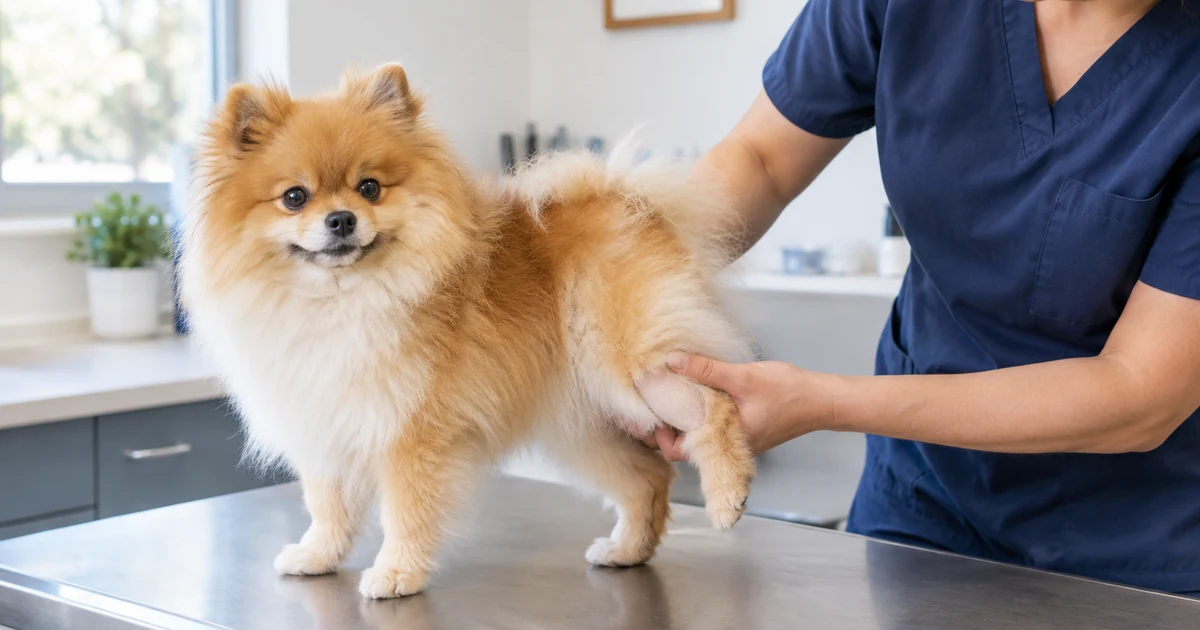
Luxating patella is mostly a small-breed problem. Toy and small dogs such as the Pomeranian, Chihuahua, Yorkshire terrier, toy poodle and Shih Tzu are among the breeds most often affected, but larger breeds such as Labradors, Akitas and Great Danes can get it too.
| Dog size | General practice vet (per knee) | Board-certified surgeon (per knee) |
|---|---|---|
| Toy and small (under 25 lb) | $1,900–$3,600 | $2,850–$5,400 |
| Medium (25–50 lb) | $2,100–$4,000 | $3,150–$5,900 |
| Large and giant (50+ lb) | $2,500–$4,700 | $3,700–$7,000 |
These are our estimates for a standard grade 2–3 repair, built from the national ranges above. Large dogs cost more because they need more anesthetic drugs, bigger implants, and more often a bone-cutting procedure to straighten the leg. Specialty hospitals typically charge 25–50% more than general practices for the same repair.
One Knee vs. Both Knees
Embrace notes the condition often affects both back legs, even if one is worse. That can nearly double the bill, depending on how the surgery is planned.
| Plan | Typical total (general vet) | Notes |
|---|---|---|
| One knee | $1,900–$3,600 | Most common quote |
| Both knees, same day | $3,200–$6,100 | One anesthesia and one hospital stay; harder recovery |
| Both knees, staged weeks or months apart | $3,600–$6,800 | Two surgeries and two anesthesias, but your dog always has one good back leg |
Simon Veterinary Surgical puts surgery on both knees at about $3,000–$7,000 in the US, which matches these ranges. Your surgeon will suggest same-day or staged surgery based on your dog’s size, age and the grade of each knee.
What’s Included in the Price
Ask whether your estimate is “all in” or covers only the operation. A typical per-knee quote at a general practice includes:
- Exam and orthopedic consult: $60–$150 at a general vet; $150–$300 with a specialist.
- Knee x-rays (often under sedation): $150–$400.
- Pre-anesthetic bloodwork: $100–$200.
- Anesthesia, IV catheter, fluids and monitoring: $300–$700.
- The surgery itself: $1,000–$2,500 for a standard repair, more for complex correction or implants.
- Pain medication and anti-inflammatories to go home: $100–$300 (Simon Veterinary Surgical).
- Follow-up visits and recheck x-rays: $200–$500 in total.
- Hospital stay: many small dogs go home the same or next day; an extra night adds about $100–$400.
Not always included: a protective cone or recovery suit, formal rehab sessions, and treatment for a complication. Ask how the clinic handles a recheck surgery if the kneecap slips again.
Surgical Techniques and What They Cost
Most repairs combine several steps, chosen by the surgeon during planning and sometimes adjusted in the operating room. Simple repairs cost less; bone procedures and implants cost more.
| Technique | What it does | Typical use | Cost impact |
|---|---|---|---|
| Soft-tissue repair (release and imbrication) | Loosens tight tissue on one side of the knee and tightens the other | Mild cases; also part of most repairs | Lowest; about $1,200–$2,200 on its own |
| Trochleoplasty (wedge or block recession) | Deepens the groove the kneecap sits in | Shallow groove, grade 2–4 | Part of a standard repair |
| Tibial tuberosity transposition (TTT) | Moves the bony attachment of the kneecap’s ligament and pins it in place | Misaligned shin, grade 2–4 | Adds implant and x-ray costs |
| Corrective osteotomy (femur or tibia) | Cuts and straightens a bowed bone, fixed with a plate | Severe bowing, many grade 4 and large-dog cases | Highest; usually $3,500–$6,000+ per knee, mostly at specialists |
A standard grade 2–3 repair usually combines soft-tissue repair, a trochleoplasty and a tibial tuberosity transposition. A review in Vet Times reported lower re-luxation rates when the groove is deepened (about 6–8%) than when it isn’t (about 20%), which is why most surgeons include it.
What Affects the Cost of Luxating Patella Surgery
Grade and complexity
Grade 4 knees, bowed bones and knees with arthritis or a torn cruciate ligament need longer surgery and more implants. If your dog also has a cruciate tear, compare the numbers in our dog ACL surgery cost guide.
Size and weight
Toy breeds are at the lower end of the price range. Large and giant dogs more often need an osteotomy and bigger plates, and they need more anesthetic drugs.
Age and health
Young dogs usually need only routine pre-op tests. Senior dogs, or dogs with heart murmurs, collapsing trachea or other issues common in toy breeds, may need extra screening and closer anesthesia monitoring.
Clinic type
General practices often repair grade 2–3 knees in small dogs. Board-certified surgeons at specialty hospitals charge more, and university teaching hospitals usually fall in between.
Region
Big coastal cities usually cost more than small towns and much of the Midwest and South. Our estimator adds a region adjustment automatically.
Complications
The Vet Times review cited an overall complication rate of about 18%, with about 13% of cases needing a second surgery, for issues such as the kneecap slipping again or an implant problem. A revision can cost as much as the first surgery, so ask in advance how it’s billed.
Recovery and Rehab Costs
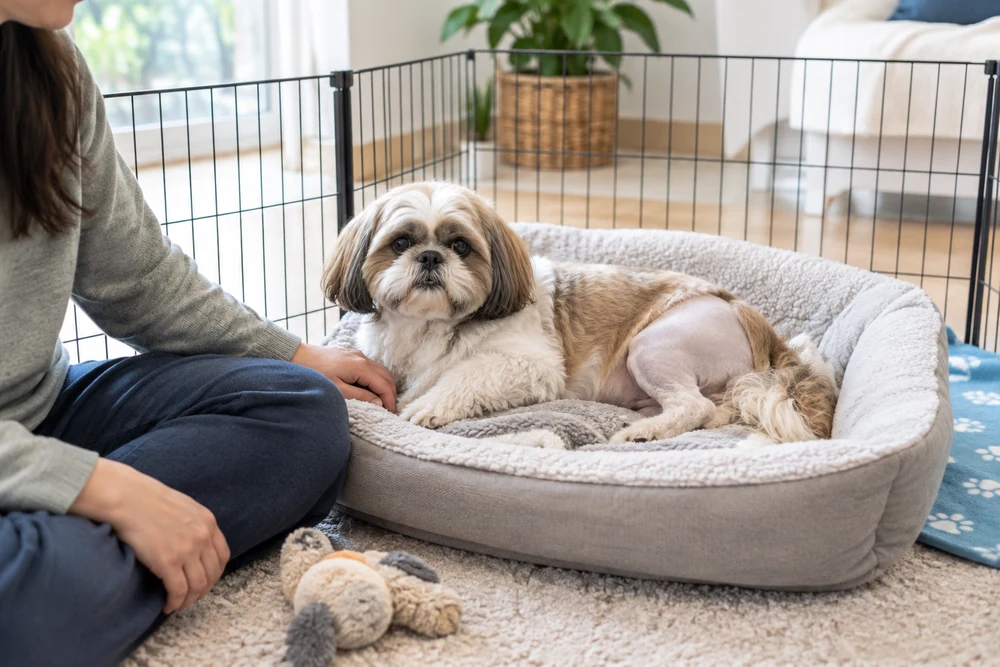
Recovery usually takes 8–12 weeks, with strict rest at first. Dogs are typically kept on a leash or in a crate or small pen, with no running, jumping or stairs, while the bone and soft tissue heal. Your surgeon gives the exact schedule.
| Recovery item | Typical cost |
|---|---|
| Rechecks and follow-up x-rays | $200–$500 |
| Take-home pain and anti-inflammatory medication | $100–$300 |
| Formal rehab / physical therapy | $40–$150 per session |
| Rehab package (about 6–8 sessions) | $300–$900 |
| Ongoing joint support afterward | $20–$50 per month |
Pawlicy lists rehab at $40–$100 per session and Simon Veterinary Surgical at $50–$150. Sessions can include guided exercise, laser therapy or underwater treadmill work. Many surgeons also give a home exercise plan, which can reduce the number of paid sessions.
General Vet vs. Board-Certified Surgeon
Both can be a reasonable choice, and the right one depends on your dog’s knee. Many experienced general practitioners routinely repair grade 2–3 knees in toy and small breeds, which is a big reason small-dog repairs can stay near $2,000–$3,500 per knee.
A board-certified veterinary surgeon (ACVS diplomate) has completed a surgical residency and board exams. Expect to pay more, often $3,000–$5,500 per knee, but specialists are usually the ones who handle grade 4 knees, bowed bones that need an osteotomy, large dogs, failed earlier repairs and knees with other injuries.
- Ask how many patella repairs the vet does each year and which techniques they use.
- Ask if they would refer your dog to a specialist, and why.
- Compare like for like: a lower quote may leave out x-rays, meds or rechecks.
Could pet insurance cover a bill like this?
Accident & illness plans typically reimburse 70–90% of eligible vet costs after the deductible, if the condition is not pre-existing and the waiting period has passed. Premiums for dogs average about $62/month and for cats about $32/month (NAPHIA, 2025).
Coverage is subject to each policy’s terms, exclusions and state availability.Does Pet Insurance Cover Luxating Patella Surgery?
Accident-and-illness policies often reimburse luxating patella surgery, after your deductible and at your reimbursement rate, when the condition shows up after enrollment and waiting periods. Pawlicy notes coverage is possible for luxating patellas that develop after the policy starts.
- Pre-existing conditions: if your vet noted a loose kneecap before enrollment, even as grade 1, that knee, and with some insurers both knees, may be excluded.
- Orthopedic waiting periods: some insurers apply a longer waiting period, often several months, to knee conditions; others can shorten it after an orthopedic exam.
- Hereditary and congenital conditions: many policies cover them, but check the wording, since luxating patella is often present from a young age.
- Rehab: some plans include physical therapy, others offer it only as an add-on.
- Accident-only plans usually don’t cover a patella problem that isn’t caused by an injury.
Coverage is subject to each policy’s terms, exclusions and state availability. Because small breeds are prone to this condition, enrolling a puppy early matters. See our guides on pet insurance cost and whether pet insurance is worth it.
Signs of a Luxating Patella
Many dogs with a mild luxating patella show a “skip”: they run normally, suddenly hold up a back leg for a few steps, then carry on as if nothing happened. Other signs include a bow-legged stance, stiffness or reluctance to jump. Book a regular vet visit if you notice any of these.
Contact your vet or an emergency hospital now if your dog suddenly can’t bear weight on a leg, cries in pain, the knee looks swollen or out of place, or your dog has had knee surgery and the leg gets worse, the incision is red or oozing, or your dog stops eating.
Questions to Ask Your Vet Before Surgery
- What grade is each knee, and does the other knee need surgery now or later?
- Which techniques do you plan to use, and might that change during surgery?
- Is the estimate per knee and all in, including x-rays, meds, rechecks and the cone?
- Will my dog stay overnight?
- How long is the rest period, and do you recommend formal rehab?
- How are complications or a second surgery billed?
How to Save Money on Luxating Patella Surgery
- Get two or three estimates: compare an experienced general practice, a specialty hospital and, if nearby, a veterinary school.
- Ask for an itemized, per-knee quote so you’re comparing the same services.
- Ask about both knees: if both need surgery, ask how same-day and staged plans compare in price and recovery for your dog.
- Use home rehab where your surgeon allows it instead of a full package of paid sessions.
- Spread the cost: many clinics accept CareCredit or Scratchpay; see how to pay for vet bills for more options.
- Keep your dog lean: extra weight puts more strain on the knees before and after surgery.
- Insure puppies early, before any knee issue is written in their records.
- Non-slip pet ramp for couch or bedCheck price on Amazon
- Non-slip rug runners for hard floorsCheck price on Amazon
- Soft recovery suit for dogs after surgeryCheck price on Amazon
Frequently Asked Questions
How much does luxating patella surgery cost for a dog?
Most dogs’ luxating patella surgery costs $1,500 to $5,000 per knee, and a standard grade 2–3 repair in a small dog at a general vet typically comes to about $2,800 all in. Board-certified surgeons, large dogs and complex grade 4 repairs sit at the top of the range or above it.
How much does it cost to fix both knees?
Surgery on both knees typically costs $3,000 to $7,000 in total. Doing both in one surgery is usually a little cheaper than two separate surgeries weeks apart, but recovery is harder, so your surgeon will suggest the plan that suits your dog.
Does a grade 1 or grade 2 luxating patella need surgery?
Not always. Many grade 1 dogs are managed with weight control and an exercise plan, and grade 2 dogs may or may not need surgery depending on how often they limp. Your vet decides after an exam and x-rays.
How long is recovery after luxating patella surgery?
Recovery usually takes about 8 to 12 weeks, starting with strict rest, leash walks only and no jumping. Rechecks, medication and any rehab sessions add a few hundred dollars or more to the total.
Is a board-certified surgeon worth the extra cost?
Many general practitioners successfully repair grade 2–3 knees in small dogs. Specialists usually charge more but are often preferred for grade 4 knees, bowed bones, large dogs and repeat surgeries. Ask your vet how often they do this surgery and whether they’d refer your dog.
Does pet insurance cover luxating patella surgery?
Accident-and-illness plans often cover it if the condition appears after enrollment and any orthopedic waiting period. A kneecap problem noted before enrollment is usually excluded as pre-existing. Coverage is subject to each policy’s terms, exclusions and state availability.
- Embrace Pet Insurance — Patellar luxation in dogs
- MetLife Pet Insurance — Luxating patella in dogs
- Pawlicy Advisor — Luxating patella in dogs: signs, surgery cost
- Simon Veterinary Surgical — Dog luxating patella surgery cost guide
- Vet Times — Canine patellar luxation part 2: treatments and outcomes
- Spectrum Care — Luxating patella surgery cost in dogs
Not veterinary advice. Prices are estimates for budgeting, not quotes. Ask your veterinarian for a written, itemized estimate. If your pet is injured, in pain or acting unwell, contact your vet or an emergency animal hospital right away.