Dog Cataract Surgery Cost: One Eye vs. Both Eyes
Treating one or both eyes is the biggest single factor in the bill. Because both eyes share the same anesthesia, hospital stay and pre-op workup, the second eye adds far less than the first.
| Scenario | Surgery fee | All in (pre-op + first-year aftercare) |
|---|---|---|
| One eye | $2,700–$4,500 | $3,600–$6,500 |
| Both eyes, same surgery | $3,500–$5,500 | $4,400–$7,500 |
| Veterinary school teaching hospital (both eyes) | $3,150–$4,950 | $4,000–$6,800 |
Published figures line up with these ranges. GoodRx puts one eye at $2,800 to $4,000 and both eyes at $3,800 to $4,900. PetMD cites $2,700 to $4,000. MetLife quotes higher bundled prices of $4,900 to $5,500 for one eye and $5,600 to $6,700 for both, including pre-op diagnostics and medications.
Dog size matters much less here than for most surgeries. Eye surgery is done with the same microsurgical equipment whether your dog weighs 12 lb or 80 lb.
What’s Included in the Price
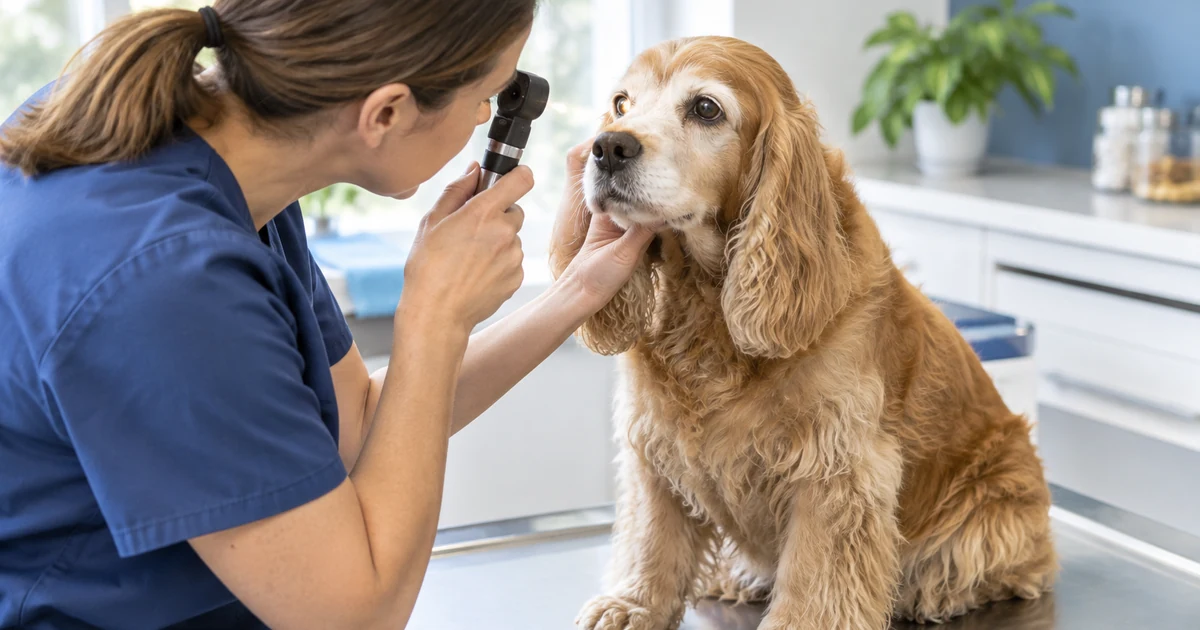
Cataract surgery is done by a board-certified veterinary ophthalmologist, usually with a technique called phacoemulsification that breaks up and removes the cloudy lens, often followed by an artificial lens implant. Clinics bundle differently, so compare line by line.
| Item | Typical cost |
|---|---|
| Initial ophthalmology consultation | $150–$250 |
| Electroretinogram (ERG) to confirm the retina works | $250–$410 |
| Ocular ultrasound to check for retinal detachment | $220–$800 |
| Pre-anesthetic bloodwork and blood pressure | $150–$250 |
| Surgery, anesthesia, lens implant, hospital stay | $2,700–$5,500 |
| Take-home eye drops and oral medication | $100–$300 |
| Recheck exams (several in the first months) | $75–$170 each |
Exam, ERG, ultrasound and recheck figures are from GoodRx’s breakdown. Some practices include the first rechecks in the surgery price, others bill each one.
What Affects the Cost of Canine Cataract Surgery
One eye or both
Doing both eyes in one session typically adds only $800 to $1,500 over a single eye. The ophthalmologist decides after testing whether both eyes are suitable.
Pre-op test results
If the ERG or ultrasound shows retinal problems, surgery may not be recommended. You’d still pay for the workup, which is why it’s billed separately.
Age and overall health
Older dogs or dogs with heart, kidney or hormonal conditions may need extra bloodwork, cardiac checks or closer anesthesia monitoring, each adding a few hundred dollars.
Diabetes
Diabetes is one of the most common causes of cataracts in dogs. Cornell’s Riney Canine Health Center reports that 75% to 80% of diabetic dogs develop cataracts within the first year of diagnosis, and they can form quickly. Ophthalmologists generally want blood sugar well controlled before surgery, so diabetic dogs may need extra glucose checks and visits. That’s a factual cost consideration, not a reason to avoid treatment.
How advanced the cataract is
Ophthalmologists often prefer to operate before a cataract becomes fully mature or causes significant inflammation. Cornell notes that earlier intervention is linked with better outcomes. A long-standing cataract with inflammation may need weeks of drops before surgery, adding visits and medication costs.
Clinic type and region
Veterinary ophthalmologists are specialists, and there are fewer of them than general vets. Prices are highest in large coastal cities. University teaching hospitals are sometimes a little less expensive and see many cataract cases.
Complications
The most common complications after surgery are prolonged inflammation and glaucoma, according to Cornell. Treating them means extra visits and medication. PetMD reports success rates of 85% to 90% in uncomplicated cases.
Recovery and Aftercare Costs
The surgery bill is not the last one. Recovery is intensive for the first month, and the ongoing costs are easy to underestimate.
- Hospital stay: many dogs go home within a day or two. Cornell describes stays of 3 to 4 days at its hospital. Longer stays are usually priced into the surgery fee but may be billed extra if complications arise.
- Eye drops: typically given 4 to 6 times a day at first, then tapered. Expect $100 to $300 for the first round of drops and oral medications.
- Hard cone: a rigid e-collar is used for about two weeks to protect the eye. Soft cones are generally not enough after eye surgery.
- Rechecks: several in the first weeks and months (commonly the day after, then at 1 week, 2 to 3 weeks, and a few months out), then at least yearly. At $75 to $170 each, the first year of rechecks can reach $300 to $700.
- Long-term drops: some dogs stay on an anti-inflammatory or pressure-lowering drop for life, a recurring cost to plan for.
- Activity changes: leash walks on a harness rather than a collar, to avoid pressure around the neck and eyes.
What If Surgery Isn’t an Option?
Not every dog is a surgical candidate, and not every family can take on the cost. That’s a decision to make with your vet and ophthalmologist. Here’s what the alternative typically costs, for budgeting only.
Cataracts can trigger inflammation inside the eye (lens-induced uveitis), which may lead to glaucoma. Dogs who don’t have surgery are often still monitored with regular eye exams and may be prescribed anti-inflammatory drops. That usually means recheck exams at $75 to $170 each plus ongoing medication, often a few hundred dollars a year.
If an eye becomes painful and can’t be managed, other procedures may be discussed, each with its own cost. Your ophthalmologist can give you a written estimate for every path so you can compare them side by side.
Could pet insurance cover a bill like this?
Accident & illness plans typically reimburse 70–90% of eligible vet costs after the deductible, if the condition is not pre-existing and the waiting period has passed. Premiums for dogs average about $62/month and for cats about $32/month (NAPHIA, 2025).
Coverage is subject to each policy’s terms, exclusions and state availability.Does Pet Insurance Cover Dog Cataract Surgery?
Accident-only plans don’t cover cataracts, since they’re an illness. Accident-and-illness plans may cover the consult, testing, surgery and medications, subject to your deductible, reimbursement rate and annual limit.
The key exclusion is pre-existing conditions: if cataracts or eye cloudiness were noted before your policy started, surgery is typically excluded. Some breeds, like American Cocker Spaniels, are prone to cataracts, and some insurers apply special terms to hereditary conditions. Illness waiting periods, commonly around two weeks, also apply. Our page is pet insurance worth it? helps you weigh premiums against a bill like this one.
Signs That Need a Vet Visit
Book a vet visit if you notice cloudiness in one or both eyes, bumping into furniture, hesitation on stairs or in dim light, or a change in how your dog tracks toys.
Contact your vet or an emergency vet right away if an eye looks red, painful, bulging or suddenly cloudy, or if your dog is squinting or pawing at it. These can signal inflammation or glaucoma, which need prompt care.
How to Save Money on Dog Cataract Surgery
- Get an itemized estimate that shows what’s bundled: consult, ERG, ultrasound, rechecks and drops.
- Ask a veterinary school hospital for a quote. Teaching hospitals do many cataract surgeries.
- Compare more than one ophthalmologist if you live within driving distance of several.
- Use financing such as CareCredit or Scratchpay to spread the cost.
- Look into assistance funds like The Pet Fund, which GoodRx lists as a possible resource for eye surgery.
- Ask about generic versions of long-term eye drops once your dog is stable.
- Insure early, before any eye changes are noted, especially for breeds prone to cataracts.
If you’re budgeting for a senior dog’s care overall, see our cost of owning a dog guide.
- Hard plastic dog recovery cone (e-collar)Check price on Amazon
- Dog harness for leash walks (no neck pressure)Check price on Amazon
Frequently Asked Questions
How much does dog cataract surgery cost?
The surgery fee is usually $2,700 to $5,500, depending on whether one or both eyes are treated. Adding the pre-op workup ($600 to $1,200) and first-year drops and rechecks ($300 to $800), most owners spend around $5,000 in total for both eyes. High-cost metro areas can push the total to $7,000 or more.
Is it cheaper to do both eyes at once?
Per eye, yes. Doing both eyes in one surgery shares the anesthesia, hospital stay and pre-op testing, so both eyes typically cost only $800 to $1,500 more than one eye. Whether both eyes are good candidates is decided by the ophthalmologist after testing.
Why are an ERG and an ocular ultrasound needed before surgery?
Removing a cataract only helps if the retina behind it works. An electroretinogram (ERG) measures retinal function, and the ultrasound checks for problems like retinal detachment that the cloudy lens hides. Together they commonly cost $500 to $1,200.
Can diabetic dogs have cataract surgery?
Many do. Cataracts are very common in diabetic dogs, and ophthalmologists generally want the diabetes well regulated before surgery. That can mean extra glucose checks or bloodwork, which adds to the cost. Your vet and ophthalmologist decide together if and when your dog is a candidate.
Does pet insurance cover dog cataract surgery?
Some accident-and-illness plans cover cataract surgery if the cataracts were not present or noted before coverage began and any waiting periods have passed. Hereditary or breed-related conditions may have specific terms, so read the policy before enrolling.
Not veterinary advice. Prices are estimates for budgeting, not quotes. Ask your veterinarian for a written, itemized estimate. If your pet is injured, in pain or acting unwell, contact your vet or an emergency animal hospital right away.