Dog Ultrasound Cost by Type of Scan
The type of ultrasound is the biggest driver of the price. A quick check for free fluid in an emergency takes minutes, while a full abdominal scan or a heart ultrasound (echocardiogram) takes longer and usually needs a more experienced ultrasonographer.
| Type of ultrasound | General vet | Specialist / referral hospital |
|---|---|---|
| Full abdominal ultrasound | $300–$550 | $500–$800 |
| Echocardiogram (heart ultrasound) | $400–$600 | $500–$800+ (with a cardiologist) |
| Pregnancy ultrasound | $300–$350 | $500–$600 |
| Focused scan (bladder, one organ) | $150–$300 | $250–$450 |
| FAST scan in the ER | Usually $100–$250 as part of an emergency workup | Same (performed by the ER vet) |
Most owners pay about $475 for an abdominal ultrasound at a general vet, including the exam fee. CareCredit reports a national average of $483 for a dog ultrasound, and PetMD puts the usual range at $300–$600. Cost guides list echocardiograms at roughly $400–$800, and pregnancy scans at about $300–$350 with a general vet.
Size matters less for ultrasound than for surgery, but large dogs can take longer to scan and deep-chested breeds can be harder to image, which may push the price toward the top of the range.
What’s Included in the Price
The ultrasound fee usually covers the scan itself. Ask what else will be on the invoice:
- Exam or office visit: about $50–$90 at a general vet; specialist consultations run roughly $50–$150 or more.
- Clipping and gel: the area is usually shaved so the probe makes good contact; this is normally included.
- Sedation (if needed): about $50–$200. Many dogs don’t need it, but anxious or painful dogs may.
- Interpretation: some clinics send images or video to a board-certified radiologist or cardiologist, and that fee may be billed separately.
- Ultrasound-guided samples: a needle aspirate or biopsy taken during the scan adds about $100–$300, plus lab fees.
- Bloodwork: often done at the same visit, $80–$300 depending on the panel.
What Affects the Cost of a Dog Ultrasound
Type and length of the scan
A focused look at one organ is cheaper than a full abdominal survey. Searching for a swallowed object or checking many organs takes longer and costs more. Echocardiograms with Doppler measurements are among the priciest scans.
Who performs it
Some general practices own an ultrasound machine and scan in house. Others book a mobile ultrasonographer, often a board-certified radiologist or cardiologist who travels between clinics, which usually costs more than an in-house scan but less than a referral hospital visit. Specialty hospitals charge the most but offer the most experience for complex cases.
Emergency timing
Emergency hospitals often perform a quick FAST (focused assessment with sonography for trauma) scan on injured or collapsed dogs. It takes only minutes and looks for free fluid in the belly or chest. A full abdominal ultrasound at an ER usually costs more than the same scan at your regular vet, on top of the emergency exam fee.
Size, temperament and health
Calm dogs can usually be scanned awake. Dogs that are anxious, in pain or very large may need sedation, which adds cost and sometimes pre-sedation bloodwork.
Region
Prices are generally higher in big cities and high-cost states. CareCredit’s state data shows average dog ultrasound prices from about $386 in Mississippi to $865 in Hawaii.
Could pet insurance cover a bill like this?
Accident & illness plans typically reimburse 70–90% of eligible vet costs after the deductible, if the condition is not pre-existing and the waiting period has passed. Premiums for dogs average about $62/month and for cats about $32/month (NAPHIA, 2025).
Coverage is subject to each policy’s terms, exclusions and state availability.Does Pet Insurance Cover a Dog Ultrasound?
Accident-and-illness policies usually reimburse ultrasounds and echocardiograms needed to diagnose a covered accident or illness, after the deductible and at your reimbursement rate. Pregnancy ultrasounds are generally not covered, since breeding and pregnancy are excluded from most standard policies.
- Pre-existing conditions: scans related to a problem that showed signs before enrollment or during the waiting period are excluded.
- Accident-only plans: may cover a FAST scan or ultrasound after an injury, but not for an illness.
- Wellness add-ons: usually pay toward routine care like vaccines and screening tests, not diagnostic imaging.
Coverage is subject to each policy’s terms, exclusions and state availability. For more on whether a policy pays off, read is pet insurance worth it.
Pregnancy Ultrasound for Dogs
A pregnancy ultrasound usually costs $300–$350 with a general vet and about $500–$600 with a specialist, plus the office visit. According to CareCredit, the scan is reliable only after about three weeks (22 days or more) of gestation. It can confirm pregnancy and check that the puppies are developing, but an x-ray late in pregnancy (from about day 55, around $180–$250) is usually the better way to count puppies. A relaxin blood test is another option, at about $200–$300.
Echocardiogram Cost for Dogs
A heart ultrasound, or echocardiogram, usually costs $400–$800. CareCredit reports an average of about $415 (range roughly $331–$805), and other cost guides list $400–$600 at general practices and up to $800 or more with a board-certified cardiologist. Doppler measurements of blood flow are often part of a full study and can raise the price.
Vets commonly suggest an echo when they hear a heart murmur, see an enlarged heart on x-rays, or want to check the heart before anesthesia in at-risk breeds. A cardiologist visit may also include an ECG and blood pressure check, each billed separately, so ask for an all-in estimate.
What to Expect During a Dog Ultrasound
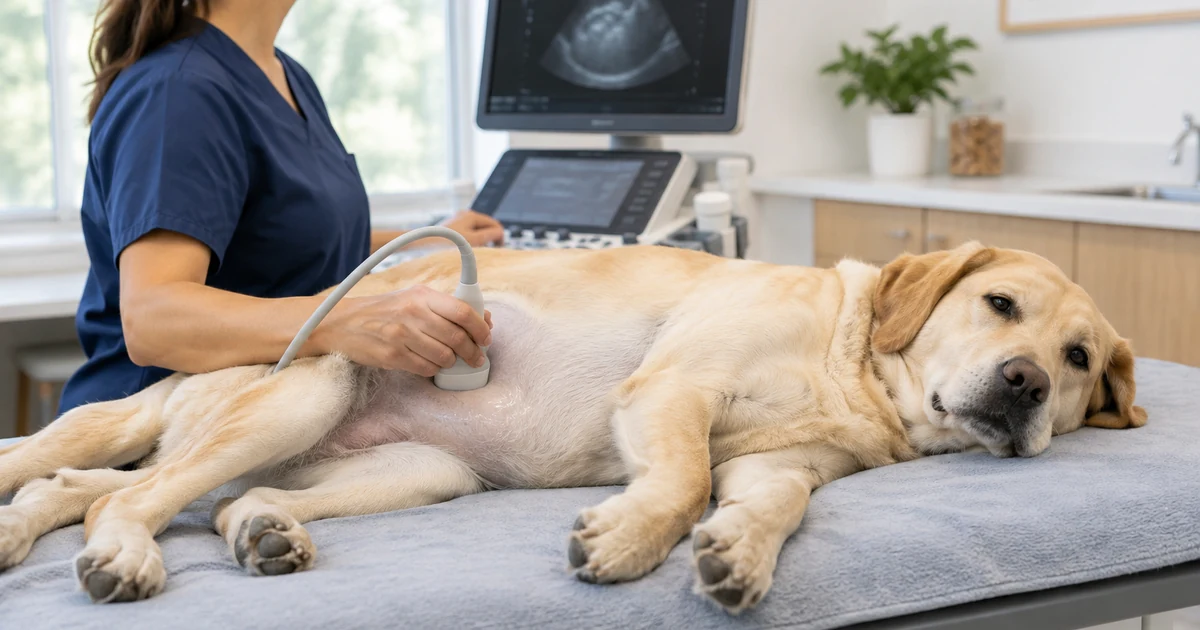
Your dog lies on a padded table, usually on its back or side, while a small patch of fur is clipped and gel is applied. The vet moves a handheld probe over the skin and watches the images live, so there’s no radiation and nothing painful involved.
Focused scans can take just a few minutes, while a full abdominal study or an echocardiogram takes longer. Many dogs go home right after, with preliminary results the same day. If images are sent to a specialist for review, the final report may come later, so ask your clinic how and when they’ll share it.
When Your Dog Might Need an Ultrasound
Vets often recommend an ultrasound after an exam, bloodwork or x-rays point to a problem with soft-tissue organs or the heart, such as abnormal liver values, a heart murmur, urinary issues or a possible mass. If ultrasound can’t give enough detail, some dogs are referred for a dog MRI or CT scan.
Go to your vet or an emergency vet right away if your dog has a swollen or painful belly, retches without bringing anything up, collapses, has pale gums or has been hit by a car. These can be emergencies, and ER teams often use a quick FAST scan to decide next steps. See our guide to emergency vet costs.
How to Save Money on a Dog Ultrasound
- Ask whether your regular vet scans in house: an ultrasound at your general practice is usually cheaper than a referral hospital.
- Ask about mobile specialists: a visiting ultrasonographer at your own clinic can give specialist-level images without full referral pricing.
- Request an itemized estimate: confirm whether the exam, sedation, radiologist review and any samples are included.
- Check vet schools and nonprofit clinics: teaching hospitals and some humane society clinics offer diagnostic imaging at reduced rates.
- Follow prep instructions: fasting as directed avoids unclear images and repeat scans.
- Share prior results: bring recent bloodwork and x-rays to avoid paying for duplicate tests.
- Use financing when needed: CareCredit and Scratchpay are widely accepted for diagnostic tests.
Frequently Asked Questions
How much is an ultrasound for a dog?
Most dog ultrasounds cost $300 to $800. An abdominal scan at a general vet typically comes to about $475 with the exam, while echocardiograms and specialist scans sit at the higher end. CareCredit reports a national average of $483.
How much is a pregnancy ultrasound for a dog?
A pregnancy ultrasound usually costs $300 to $350 with a general vet and about $500 to $600 with a specialist, plus the office visit. It’s reliable after about three weeks of gestation. Counting puppies is usually done with an x-ray later in pregnancy.
Do dogs need to be sedated for an ultrasound?
Many dogs are scanned awake while lying calmly on a padded table. Anxious or painful dogs may need light sedation, which typically adds $50 to $200. Your vet will tell you if it’s likely.
Is an ultrasound better than an x-ray for dogs?
They show different things. X-rays are good for bones, the chest and many swallowed objects, while ultrasound shows the inside of soft-tissue organs and the heart in motion. Vets often use both, and will recommend the test that fits your dog’s situation.
Does pet insurance cover dog ultrasounds?
Accident-and-illness policies usually reimburse ultrasounds needed to diagnose a covered accident or illness, after the deductible. Pregnancy scans and pre-existing conditions are generally excluded. Coverage is subject to each policy’s terms, exclusions and state availability.
Not veterinary advice. Prices are estimates for budgeting, not quotes. Ask your veterinarian for a written, itemized estimate. If your pet is injured, in pain or acting unwell, contact your vet or an emergency animal hospital right away.