Bengal Cat Price by Generation and Quality
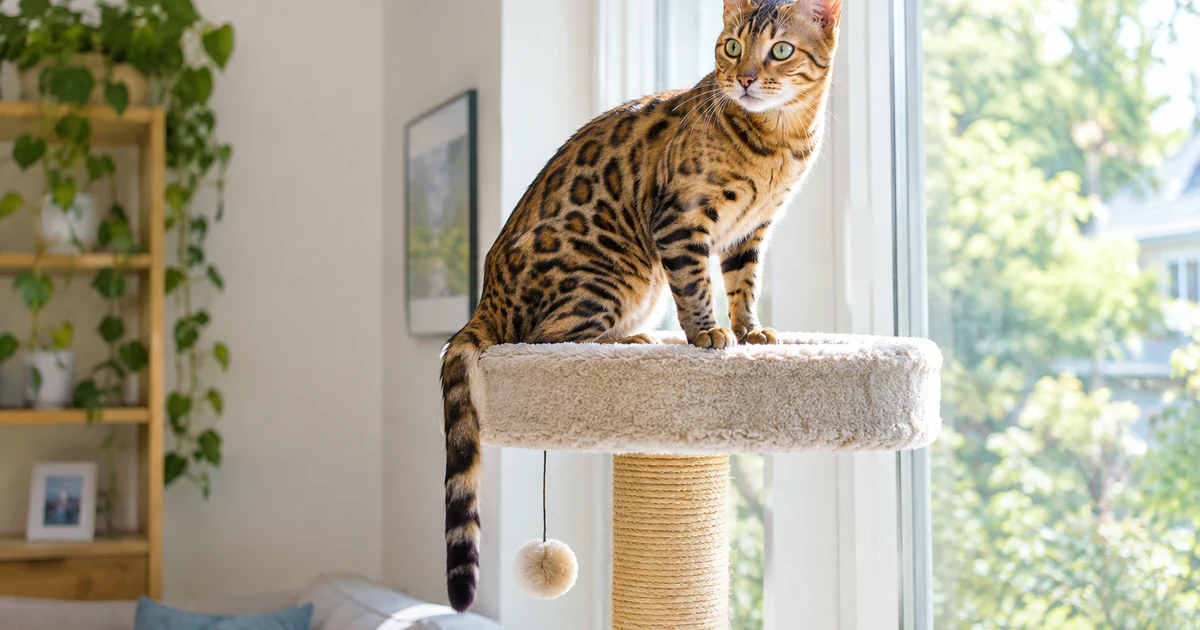
What you pay for a Bengal depends mostly on its generation, its coat and whether it is sold as a pet or for breeding. Nearly all pet Bengals sold in the US are SBT cats, many generations removed from the wild Asian leopard cat.
| Type of Bengal | Typical price | Notes |
|---|---|---|
| Rescue or rehoming adoption | $100–$400 | Usually an adult; Bengal-specific rescues exist in many regions |
| Pet-quality SBT kitten | $1,500–$3,000 | TICA-registered, sold on a spay/neuter contract |
| Snow Bengal (seal lynx, mink, sepia) | $2,000–$4,000 | Pale coat with blue or aqua eyes in some colors |
| Silver, charcoal or blue Bengal | $3,000–$6,000 | Less common coat genes carry a premium |
| Show or breeding quality | $3,500–$6,000 | Strong breed type, often champion lines, breeding rights extra |
| Early generation (F2–F3) | $2,500–$8,000 | Mostly sold to breeders; restricted in some places |
| F1 (first generation) | $10,000–$20,000+ | Half wild parentage; rarely suitable as a pet and illegal in several places |
If a listing offers a “purebred Bengal kitten” for $300 to $500, treat it as a likely scam. Legitimate breeders rarely go below about $1,500 for a registered kitten.
F1–F4 vs. SBT: what the letters mean
An F1 Bengal has an Asian leopard cat parent. Each later generation (F2, F3, F4) is one step further from the wild ancestor. SBT means “stud book tradition”: the cat has at least three generations of Bengal-to-Bengal breeding behind it, typically four or more generations removed from the leopard cat. These are the cats TICA allows in the show ring, and the ones most breeders sell as pets.
Early-generation males are frequently infertile, and early-generation cats are generally treated as foundation stock for breeding programs rather than family pets. For most households, an SBT kitten is the realistic choice.
Snow and silver Bengal price
Snow Bengals (seal lynx point, seal mink and seal sepia) usually cost a few hundred to a thousand dollars more than a standard brown spotted kitten. Silver, charcoal and blue kittens tend to be priced higher still because fewer breeders produce them. Coat color has no bearing on health or temperament, so you’re paying for looks.
Is a Bengal Cat Legal Where You Live?
Because the breed descends from a wild cat, some states and cities regulate Bengals, usually by generation. The rules below are commonly reported by breed and pet publications. Laws change, so confirm with your state wildlife or agriculture agency and your city’s animal control before you put down a deposit.
| Place | Reported rule |
|---|---|
| Hawaii | All Bengals prohibited |
| New York City | Bengals prohibited in all five boroughs |
| Connecticut | Reported as prohibited regardless of generation |
| Seattle, WA | Hybrid cats prohibited by city code |
| New York State (outside NYC) | Allowed if at least five generations removed and registered |
| Denver, CO | Earlier generations restricted; later generations allowed |
| Massachusetts | Allowed with registration certifying no wild parentage for three generations |
| Alaska and Iowa | Must be four or more generations removed from the Asian leopard cat |
| Delaware and Georgia | Permit reported as required |
Most other states allow SBT Bengals without special paperwork. Keep your kitten’s registration papers, since they are how you prove its generation if anyone asks.
First-Year Cost of a Bengal Cat
Bengals are athletic, curious and high-energy. They don’t cost much more to feed than an average cat, but they need more climbing space and toys, or they will find their own entertainment.
| Expense | First-year cost |
|---|---|
| Kitten (pet-quality SBT) | $1,500–$3,000 |
| Kitten vet visits, vaccines, microchip | $300–$700 |
| Spay/neuter (if not already done) | $200–$500 |
| Food and litter | $800–$1,300 |
| Setup and enrichment: tall cat tree, scratchers, puzzle toys, carrier | $300–$700 |
| Pet insurance (optional, 12 months) | $300–$700 |
| Typical first-year total | about $2,900–$5,700 |
An exercise wheel for cats is a popular extra for Bengals and can add a few hundred dollars. Many breeders include first vaccines and sometimes the spay/neuter, so compare what each kitten price covers. Our guide to cat vet visit costs details routine vet bills.
Yearly Cost After the First Year
From year two, expect roughly $1,400 to $3,050 a year, about $125 to $210 a month on average.
- Food: $500–$900 a year.
- Litter: $200–$400 a year.
- Routine vet care: $200–$500 a year for wellness exams and vaccines.
- Pet insurance: $300–$700 a year, rising as your cat ages.
- Toys and enrichment: $100–$300 a year.
For the bigger picture, see our cost of owning a cat guide.
Bengal Cat Health Issues and Their Costs
Three inherited conditions are well documented in Bengals. Reputable breeders test for them, and you should ask to see the results for both parents.
| Condition | What it is | Screening cost | Possible cost if affected |
|---|---|---|---|
| Hypertrophic cardiomyopathy (HCM) | Thickened heart muscle; Bengals are one of the predisposed breeds | Echocardiogram of breeding cats, often $400–$800 with a cardiologist | Treatment and monitoring can total $3,000–$8,000 over time |
| Pyruvate kinase (PK) deficiency | Inherited, intermittent anemia causing lethargy and weakness | DNA test $47 at UC Davis ($71 bundled with PRA-b) | Bloodwork, monitoring and, in severe cases, transfusions |
| Progressive retinal atrophy (PRA-b) | Inherited blindness beginning in kittenhood, with very poor vision by about age 2 | DNA test $47 at UC Davis | No cure; mostly eye exams and home adjustments |
Why a DNA test isn’t enough for HCM
PK deficiency and PRA-b are recessive, so two carrier parents can produce affected kittens. A simple DNA test on the parents rules that out. HCM is different: there is no single genetic test for it in Bengals, so the standard is regular echocardiograms of breeding cats by a veterinary cardiologist. A breeder who says “our cats are HCM tested” should be able to show you dated echo reports.
Could pet insurance cover a bill like this?
Accident & illness plans typically reimburse 70–90% of eligible vet costs after the deductible, if the condition is not pre-existing and the waiting period has passed. Premiums for dogs average about $62/month and for cats about $32/month (NAPHIA, 2025).
Coverage is subject to each policy’s terms, exclusions and state availability.Does Pet Insurance Cover Bengal Health Problems?
Insurance for a Bengal typically runs $30 to $60 a month for a kitten and can climb to $40 to $80 a month by around age 7. Purebreds with known inherited conditions tend to cost more to insure than mixed-breed cats.
- Accident-and-illness plans can cover heart disease, anemia workups and eye problems, subject to your deductible, reimbursement rate and annual limit.
- Hereditary and congenital conditions are covered by many plans but not all. Check this line carefully for a Bengal.
- Pre-existing conditions are generally excluded, including anything noted in the kitten’s records before coverage starts or during the waiting period.
- Waiting periods for illness usually apply after enrollment.
- Wellness add-ons spread out routine costs but don’t cover illness.
Coverage is always subject to policy terms. Our guide is pet insurance worth it? helps you weigh premiums against likely bills.
When to Call the Vet Right Away
Contact your vet or an emergency vet right away if your Bengal has fast, labored or open-mouth breathing, sudden weakness or trouble using its back legs, collapse, pale or yellow gums, or stops eating. These signs need same-day care and shouldn’t be watched at home.
How to Save Money on a Bengal Cat
- Check Bengal rescues first. High-energy Bengals are sometimes rehomed as adults, with adoption fees around $100–$400.
- Choose a standard brown spotted SBT kitten. Snow, silver and charcoal coats cost more without changing health or personality.
- Ask about retired breeders. Many catteries place spayed or neutered adults for much less than a kitten.
- Compare what’s included: vaccines, microchip, spay/neuter, health guarantee and a starter bag of food.
- Build enrichment cheaply. Rotating toys, cardboard boxes and window perches keep a Bengal busy without constant new purchases.
- Enroll in insurance early or keep a dedicated vet fund, and know that CareCredit or Scratchpay financing is available at many clinics.
- Tall floor-to-ceiling cat tree for active catsCheck price on Amazon
- Interactive puzzle feeder and wand toy setCheck price on Amazon
How to Spot Bengal Kitten Scams
Bengals are one of the breeds most often used in fake online kitten listings. The Better Business Bureau’s advice applies directly:
- Prices far below market, such as a “Bengal kitten for $400.”
- Payment requested by wire transfer, gift card or cash app, which offer no fraud protection.
- The seller refuses a live video call or a visit.
- The same kitten photos appear on other sites in a reverse image search.
- Extra “shipping,” “crate” or “vaccination” fees keep appearing after the deposit.
- No TICA registration, no parent health-test results, no written contract, or vague answers about the kitten’s generation.
Frequently Asked Questions
How much is a Bengal kitten?
A pet-quality SBT Bengal kitten usually costs $1,500 to $3,000, with about $2,200 being typical. Snow Bengals run about $2,000 to $4,000, and silver, charcoal or show-quality kittens $3,000 to $6,000.
What is the difference between an F1 and an SBT Bengal?
An F1 Bengal has an Asian leopard cat parent, and each later generation is one step further removed. SBT Bengals have several generations of Bengal-to-Bengal breeding and are the cats sold as pets and shown by TICA. F1 cats can cost $10,000 or more and are restricted or illegal in several places.
Are Bengal cats illegal anywhere in the US?
Hawaii and New York City are widely reported to prohibit Bengals, and Connecticut and Seattle are also commonly listed as restricting them. Several states, including Alaska, Iowa, Massachusetts and New York, allow only later generations. Check with your state wildlife or agriculture agency and your city before buying.
How much does a Bengal cat cost per year?
After the first year, most owners spend about $1,400 to $3,050 a year on food, litter, routine vet care, enrichment and insurance. That works out to roughly $125 to $210 a month.
What health tests should a Bengal breeder do?
Look for DNA results for PK deficiency and PRA-b on both parents, plus recent echocardiogram reports screening for HCM. These tests are relatively inexpensive for breeders, so a breeder who can’t show them is a red flag.
Not veterinary advice. Prices are estimates for budgeting, not quotes. Ask your veterinarian for a written, itemized estimate. If your pet is injured, in pain or acting unwell, contact your vet or an emergency animal hospital right away.