Ragdoll Cat Price by Quality and Source
Where your Ragdoll comes from, and what rights come with it, sets most of the price. The majority of families buy a pet-quality kitten, sold on a spay/neuter contract.
| Source | Typical price | What you get |
|---|---|---|
| Shelter or breed rescue | $75–$600 | Usually an adult Ragdoll or Ragdoll mix; vaccines, microchip and spay/neuter often included |
| Retired adult from a breeder | $400–$1,200 | An altered adult cat retired from a breeding or show program |
| Pet-quality kitten (registered breeder) | $1,500–$3,000 | Healthy, socialized kitten, spay/neuter contract, health guarantee |
| Kitten with breeding rights | $3,000–$5,000+ | Full registration; usually only sold to vetted breeders |
| Show-quality kitten | $3,500–$6,000+ | Closest match to the breed standard, often from titled lines |
Some well-known catteries charge $2,500 to $3,500 even for pet kittens, especially on the coasts. A “purebred” Ragdoll advertised far under $1,000 by a seller you have never met is a warning sign, not a deal.
Pet vs. breeder vs. show quality
Kittens of all three grades can come from the same litter. A pet-quality kitten might have mitts that aren’t perfectly even or a blaze on the face, none of which matters at home. Breeding rights cost more because they let the buyer produce registered litters. Show quality means the breeder expects the kitten to do well against the breed standard.
Colors and patterns
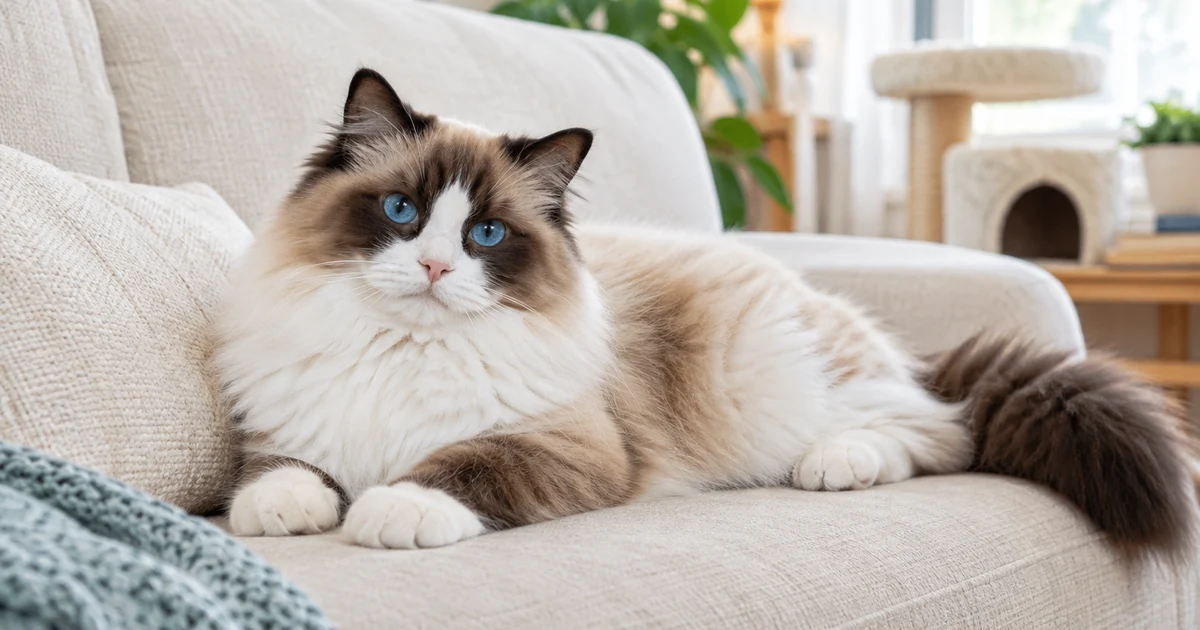
Ragdolls are pointed cats with blue eyes. The traditional colors are seal and blue, while chocolate, lilac, red and cream are less common and some breeders charge more for them. Patterns include colorpoint, mitted and bicolor, plus lynx and tortie variations. Mink and sepia Ragdolls are sold by some breeders but are not accepted for showing by the major registries, so a higher price for them reflects rarity, not show value.
TICA and CFA registered breeders
Reputable Ragdoll breeders register their cats with TICA (The International Cat Association) or CFA (The Cat Fanciers’ Association). Registration doesn’t guarantee health, but it lets you check the pedigree. Ask to see the parents’ papers and their HCM DNA results before paying a deposit.
First-Year Cost of a Ragdoll
Ragdolls are a large, slow-maturing breed, so budget for adult-size gear and a bit more food than an average house cat.
| Expense | First-year cost |
|---|---|
| Kitten (pet quality) | $1,500–$3,000 |
| Kitten vet visits, vaccines, deworming, microchip | $300–$700 |
| Spay/neuter (if not already done) | $150–$500 |
| Food and litter (12 months) | $500–$900 |
| Setup: large litter box, carrier, cat tree, bed, brush and comb | $200–$500 |
| Pet insurance (optional, 12 months) | $240–$600 |
| Typical first-year total | about $2,500–$5,100 (around $3,700 for most owners) |
Many breeders include the first vaccines, a microchip and often the spay/neuter in the kitten price, so compare what’s included, not just the sticker. Our guide to cat vet visit costs explains those kitten bills.
Yearly Cost After the First Year
From year two, most Ragdoll owners spend about $1,100 to $2,400 a year, or roughly $90 to $200 a month, before any illness.
- Food: $400–$1,000 a year, depending on wet vs. dry and brand.
- Litter: $180–$420 a year.
- Routine vet care: $200–$500 a year for a wellness exam and vaccines.
- Dental care: a professional cleaning every year or two; typically $550–$1,100 at a general vet.
- Grooming: the semi-long coat has little undercoat, so a good comb and brushing once or twice a week usually prevents mats.
For the complete picture, see our cost of owning a cat breakdown.
Ragdoll Health Issues and Their Costs
Ragdolls are generally healthy, relaxed cats. Two issues come up often enough in the breed that they belong in your budget.
| Condition | What it is | Screening cost | Possible cost if affected |
|---|---|---|---|
| Hypertrophic cardiomyopathy (HCM) | Thickening of the heart muscle; Ragdolls carry a known breed mutation (RD-HCM, R820W in the MYBPC3 gene) | DNA test about $47 at UC Davis; echocardiogram $400–$800 (about $550–$1,100 with a cardiologist consult) | Cardiology workup, then ongoing rechecks and prescribed medication |
| Urinary stones | Mineral stones in the kidneys, ureters or bladder; Ragdolls were among the breeds at higher risk of kidney and ureter stones in UK research | Urinalysis $30–$80; X-rays $100–$250 | Bladder stone surgery (cystotomy) about $1,000–$3,000, often $1,500–$5,000+ all in |
| Dental disease | Tartar, gum disease and tooth resorption, common in all cats | Yearly oral exam at the wellness visit | Cleaning about $550–$1,100; extractions add more |
RD-HCM gene test and echo screening
The Ragdoll HCM DNA test looks for one specific mutation. Cats with two copies usually develop severe HCM early in life, while cats with one copy often never show signs. Because a negative DNA result doesn’t rule out other causes of HCM, careful breeders also have breeding cats scanned by echocardiogram. Ask for the parents’ DNA results (ideally negative/negative) and recent echo reports.
Bladder and kidney stones
Stones are found through urine tests, X-rays or ultrasound. Some types can be managed with a prescription diet, while others need surgery or a less invasive procedure at a referral hospital. Encouraging water intake, for example with wet food or a fountain, is a simple habit many vets suggest for cats in general.
Could pet insurance cover a bill like this?
Accident & illness plans typically reimburse 70–90% of eligible vet costs after the deductible, if the condition is not pre-existing and the waiting period has passed. Premiums for dogs average about $62/month and for cats about $32/month (NAPHIA, 2025).
Coverage is subject to each policy’s terms, exclusions and state availability.Does Pet Insurance Cover a Ragdoll’s Health Problems?
Pet insurance for a Ragdoll typically costs about $20 to $50 a month, depending on age, location, deductible and plan. Purebreds with known inherited risks usually cost a bit more to insure than mixed-breed cats.
- Accident-and-illness plans can cover heart disease, urinary stones, diagnostics such as echocardiograms and surgery, subject to your deductible, reimbursement rate and annual limit.
- Pre-existing conditions are generally excluded. Anything noted in the records before coverage starts, or during a waiting period, usually isn’t covered.
- Waiting periods apply to illnesses, often around two weeks, so enroll before problems show up.
- Hereditary and congenital conditions such as HCM are covered by many but not all plans. Check this wording carefully for a purebred.
- Wellness add-ons help budget for vaccines and exams but don’t cover illness.
Coverage is always subject to the policy’s terms. Our guide is pet insurance worth it? walks through the numbers.
When to Call the Vet Right Away
Contact your vet or an emergency vet right away if your Ragdoll is straining in the litter box and producing little or no urine, has fast or labored breathing at rest, breathes with an open mouth, suddenly can’t use its back legs, or collapses. A blocked bladder and heart trouble can both become life-threatening within hours. Our emergency vet cost guide explains what an urgent visit typically costs.
How to Save Money on a Ragdoll
- Consider adoption. Breed rescues and shelters sometimes list Ragdolls and Ragdoll mixes for $75–$600, usually vaccinated and altered.
- Ask about retired adults. Breeders often place retired cats for $400–$1,200, a fraction of the kitten price.
- Compare what’s included. A $2,500 kitten that is vaccinated, microchipped and already spayed may cost less overall than a $2,000 kitten that isn’t.
- Don’t pay extra for a color you don’t need. A seal or blue kitten from the same health-tested parents is often cheaper than a rare color.
- Pick up the kitten yourself if you can. Flight nannies and delivery can add several hundred dollars.
- Keep up with preventive care. Wellness plans, home tooth brushing and a healthy weight help avoid bigger bills later.
- Plan for big bills. Enroll in insurance early or keep an emergency fund, and know that financing like CareCredit or Scratchpay exists.
- Stainless steel grooming comb for semi-long-haired catsCheck price on Amazon
- Cat water fountainCheck price on Amazon
- Large cat tree with wide baseCheck price on Amazon
How to Spot Ragdoll Kitten Scams
Ragdolls are among the breeds most often used in online kitten scams. Watch for these red flags:
- A price far below $1,000 for a “purebred” Ragdoll kitten.
- Requests to pay by wire transfer, gift card or payment apps with no buyer protection.
- No live video call and no chance to visit the cattery or see a parent.
- Photos that appear elsewhere online in a reverse image search.
- Surprise “shipping,” “crate” or “insurance” fees after you send a deposit.
- No TICA or CFA papers, no HCM DNA results for the parents and no written contract.
Frequently Asked Questions
How much is a Ragdoll kitten?
A pet-quality Ragdoll kitten from a registered breeder usually costs $1,500 to $3,000, with about $2,200 being typical. Kittens with breeding rights run about $3,000 to $5,000, and show-quality kittens $3,500 to $6,000 or more.
Why are Ragdoll cats so expensive?
Responsible breeders pay for HCM DNA testing and echocardiograms on their breeding cats, registration, vet care, vaccines, often the spay/neuter, and weeks of socialization. Ragdolls are also one of the most popular cat breeds in the US, which keeps demand high.
Do Ragdoll colors change the price?
Sometimes. Seal and blue are the most common colors, while chocolate, lilac, red and cream are less common and some breeders charge more for them. Mink and sepia Ragdolls may also cost more, but they can’t be shown in the major registries.
Can I adopt a Ragdoll instead of buying one?
Yes. Breed rescues and shelters sometimes have Ragdolls or Ragdoll mixes, with adoption fees usually between $75 and $600. Most are adults, and they are often already vaccinated and spayed or neutered.
How much does a Ragdoll cost per year?
After the first year, most owners spend about $1,100 to $2,400 a year on food, litter and routine vet care. Pet insurance, dental cleanings or an illness can push that higher.
- Petful — Ragdoll Cat Price: Full Cost Breakdown
- Catster — How Much Does It Cost to Own a Ragdoll Cat?
- Wiseacres Ragdolls — How Much Does a Ragdoll Kitten Cost?
- UC Davis Veterinary Genetics Laboratory — HCM in Ragdolls
- Royal Veterinary College VetCompass — Cat breeds at highest risk of kidney stones
- Vety — Bladder Stones in Cats Surgery Cost
Not veterinary advice. Prices are estimates for budgeting, not quotes. Ask your veterinarian for a written, itemized estimate. If your pet is injured, in pain or acting unwell, contact your vet or an emergency animal hospital right away.